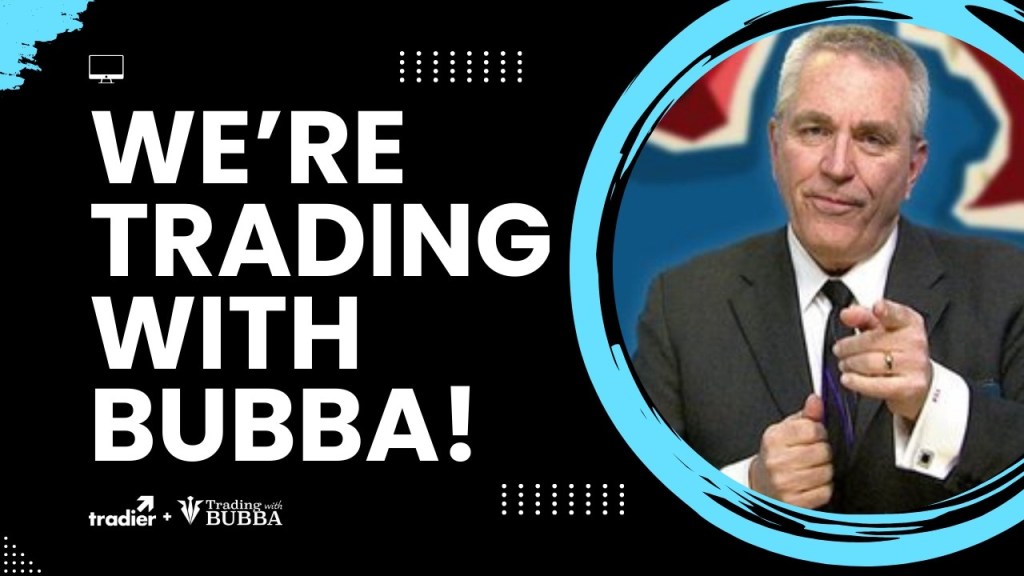
This episode leans into a genuinely fun format shift: rather than the usual single-week market review, Joe Tighe and Brian Stutland use the show to zoom out and compare the current market cycle to 1995-97, when the Fed cut rates a handful of times and equities went on to post a 19% year followed by a 56% two-year run. Brian, sporting a 1996 Chicago Bulls championship shirt for the occasion, makes the case directly: a similar rate-cutting backdrop, a genuine technology revolution underway, and a market that keeps finding a bid on every pullback all rhyme with that earlier stretch. Joe is receptive to the comparison but careful not to overstate it, noting that if the pattern does repeat, it likely won’t repeat exactly, and that some version of excess liquidity finding its way into risk assets seems like the more durable throughline than any specific price target.
The most entertaining stretch of the episode is a genuinely substantive debate over Oracle, which has been getting hammered on concerns about circular AI financing — Oracle lending to OpenAI, which raises OpenAI’s valuation, which lets it commit to more Oracle infrastructure spending, and so on. Brian pushes back on the market’s harsh treatment of the stock by contrasting it with Rocket Lab, a much smaller, unprofitable company trading near its highs on pure speculation about future space-based data centers. His argument lands well: if investors are willing to pay a premium for the idea of data centers that might exist in orbit someday, it’s inconsistent to punish Oracle this severely for building data centers that exist and are generating revenue right now. Joe pushes back thoughtfully in turn, noting the real risk isn’t whether the current data centers are profitable, it’s whether Oracle’s balance sheet can absorb the debt if OpenAI doesn’t scale into its side of the bargain — a nuanced, genuinely two-sided exchange rather than either host just talking their book.
From there, the conversation turns to where AI leadership goes next, with both hosts making a case for Google as an underappreciated name relative to its AI peers. Joe’s argument centers on Google’s approach to long-horizon research — autonomous driving through Waymo, quantum computing — versus what he frames as more short-term, cash-grab-oriented bets elsewhere in the sector, while Brian layers in the technical picture, flagging the stock tracking its 50-day moving average and treating any pullback there as a buying opportunity rather than a red flag. Tesla gets a similar bullish treatment, with the hosts connecting Elon Musk’s now-notorious pay package to the broader thesis that Tesla’s actual value increasingly lives in adjacent bets like Grok, robotics, and full self-driving rather than car sales alone.
The financial sector gets real attention too, with Brian making the case for owning banks — JPMorgan, Wells Fargo, and HSBC specifically — as a steepening yield curve and continued rate cuts create a genuinely favorable setup, while also serving as a tell on the broader economy’s health: strong bank stocks and active AI-related dealmaking, in his view, are signs the economy isn’t showing the kind of stress that typically ends a cycle like this one. It’s a useful complement to Joe’s Ep. 115 caution on consumer discretionary spending, giving viewers two different sector reads happening at once rather than a single uniform narrative.
The episode closes with a lighter-weight version of the usual trade of the week: rather than a directional bet, the hosts walk through a defined-risk iron condor on SPY built around triple-witching week, selling a 687/675 strangle and buying wings further out to cap risk to about $5 while collecting roughly $2.11 in credit. Brian’s reasoning is refreshingly mechanical rather than predictive — heavy options expiration around triple witching tends to act as a magnet pinning price in a range for that specific week, which is exactly the kind of setup a defined-risk, non-directional trade is built for.