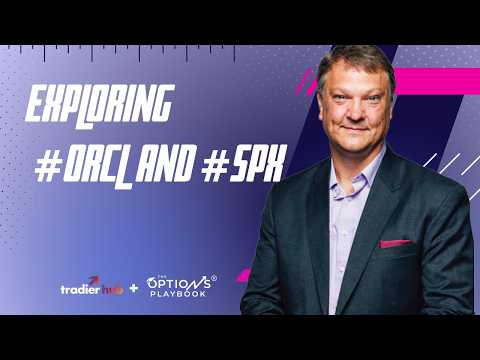
This episode showcases one of ORATS’ newer and more powerful features: letting its Otto AI agent generate the custom signal files that drive the intraday and end-of-day backtesters, rather than requiring a trader to hand-build them. Tyler explains the underlying mechanism clearly for viewers new to it — ORATS’ backtesters have long supported an entry/exit CSV file that overrides the standard time and date settings, letting a trade avoid earnings, trade only certain weekdays, or filter around specific market conditions, but building that file manually has always been the tedious, technical barrier keeping most traders from using the feature at all.
Matt kicks off the live demo with a genuinely well-chosen first example: a zero-DTE Apple put credit spread, entering intraday at 9:34, that should skip the two trading sessions before earnings and the one session after. Otto correctly infers that a true zero-DTE structure on Apple only makes sense entering on Fridays, builds the earnings-avoidance logic using ORATS’ own earnings calendar data, and produces a working signal file that plugs directly into the intraday backtester — with the date and time fields visibly greyed out in the UI to show they’re now controlled by the generated file rather than manual input.
The episode runs through several increasingly specific follow-up examples that make the feature’s real value clear: a zero-DTE short strangle that only enters on Mondays and Fridays when the VIX closed above 18 the prior day, and an intraday iron condor that skips FOMC announcement days entirely using ORATS’ macro calendar. Matt is upfront that conditions like the VIX threshold or a specific macro-event exclusion simply weren’t practical to build by hand in the standard UI — they’re the kind of granular, conditional logic that used to require real technical effort, and now take one plain-English sentence.
There’s a genuinely candid moment mid-episode where the demo doesn’t go perfectly on the first try — a scan appears queued without updating in the visible UI, and Tyler and Matt troubleshoot it live by refreshing and starting a fresh chat session rather than editing around the confusion. Rather than cutting that out, leaving it in makes the episode more useful, not less: it shows viewers what actually happens when a still-maturing AI tool hiccups, and that the fix is often as simple as restarting the conversation rather than assuming something is fundamentally broken.
Matt and Tyler close by noting that this signal-generation capability works identically in both the intraday and end-of-day backtesters, and that Otto will explain, in its own response, exactly what filtering logic it applied and why — which Tyler flags as a genuinely useful side benefit, since reading Otto’s reasoning has, in his own trading, surfaced insights about upcoming macro events he wouldn’t have otherwise thought to check before placing a trade. For traders who’ve wanted to backtest a conditional strategy but been blocked by the manual CSV requirement, this episode is a clear demonstration that the barrier has effectively been removed.