Before the guest segment even starts, Lex and Mark spend the opening bell on SpaceX, which has become impossible to ignore in options flow lately. With lockup shares starting to loosen and earnings landing mid-August, Mark reads the price action as a tell: the stock keeps popping in the morning and fading by the close, which he flags as a classic sign of steady institutional sell pressure working through the day via VWAP orders. Neither of them is making a fundamental call on the company — the point is narrower and more useful than that: when a name this liquid keeps bleeding lower through the session, that’s order flow talking, and it’s worth listening to regardless of what you believe the stock is actually worth.
Lex follows with a trade recap on UnitedHealth, walking through a double diagonal (or, depending how you want to frame it, a call diagonal and a put diagonal stacked together) built around a gap between one-day and eight-day implied volatility. He’d shorted the 440 call and sold the same-week put spread going into a premarket move that had the stock briefly trading near $450, then watched it settle back under 440 by the time the show started. He closed the call spread side for a profit that covered the entire cost of the four-leg structure, leaving him holding a free naked put for the following week. It’s a trade that only works with active management — both Lex and guest Puya agree this isn’t a set-and-forget position — but it’s a clean example of turning a volatility view into a defined, low-cost structure around an earnings gap.
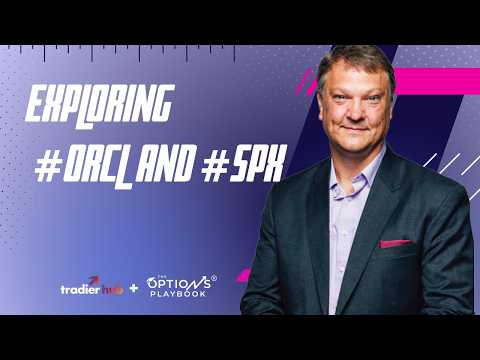
The back half of the episode is a demo from Puya Tagal of Financial AI, a retail-facing offshoot of Big Data Federation, the parent company behind an institutional hedge fund that runs roughly thirty automated strategies. Puya’s pitch is that most people trying to build and test an options or stock strategy are stuck between clunky screening tools and actually knowing how to code — Financial AI is built to close that gap with plain-language requests: ask it to find short puts on Micron sixty days out with a $200 to $500 credit and a low assignment probability, and it returns real contracts with historical odds attached, ready to route to a connected broker. He walks through a live example backtesting an Nvidia earnings straddle, and another building a dividend-weighted stock basket that outperformed a standard high-dividend benchmark, with the platform showing its full logic and historical picks for verification rather than just spitting out a black-box answer.
What comes through in the conversation is less about any single feature and more about the philosophy behind it: Puya keeps returning to the idea of removing emotion and overconfidence from trading by forcing every idea through a systematic backtest first, the same discipline his firm applies to its own money. At under $100 a month with no cap on how many questions a user can ask, it’s positioned less as a beginner tool and more for traders who already have a strategy and want to stop doing the manual legwork of testing and deploying it. Lex and Mark round out the episode with their usual speed round, plus a rare admission from Lex that his golf game may finally be catching up with his wine consumption.